Wise vs Up Travel Card: 2026 Guide
Wise is a global provider of multi-currency account and card services, as well as fast, low cost international transfers. Up is backed by Bendigo Bank and offers convenient global spending with the Up card, with low overall costs. But which is best?
This guide walks through how they both work and how they compare, on card services and international transfers.
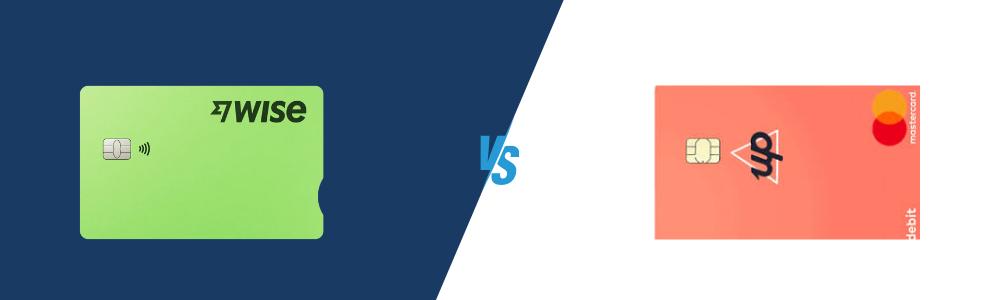
Key points: Up vs Wise travel cards
- Wise is built for multi-currency use: Hold and exchange 40+ currencies, receive payments in 8+ currencies with local account details and spend in 150+ countries using the mid-market exchange rate with transparent fees from 0.63%.
- Up is an AUD-only account with global spending: Balances are held in AUD, while overseas card purchases are converted automatically using the Mastercard exchange rate with 0% bank markup.
- International transfers are similar with both: Up’s international payments are powered by Wise, so fees, exchange rates and delivery speeds are generally the same whether you send directly with Wise or through Up.
- Wise offers more flexibility overall: Receive support for business accounts, multi-currency balance and receiving foreign payments if you need to transact in multiple currencies regularly.
- Up suits simpler travel needs: With joint accounts, no card fee, and backing from an Australian bank, Up is useful work if you mainly want to spend overseas and prefer to keep everything in AUD.
Writer’s tip: Choosing between Wise vs Up Travel Card
When comparing Wise vs Up Travel Card, start by thinking about how you use money abroad. Managing multiple currencies or receiving payments from overseas tends to favour Wise, while straightforward travel spending from an AUD balance may suit Up. How often you convert currency or send money internationally usually matters more than focusing on small differences in fees alone.
Wise vs Up Travel Card: side by side
As we’ll see, Wise and Up offer many similar features – but they’re not exactly the same. Let’s start with an overview of Wise vs Up Travel Card side by side, looking at available features.
| Feature | Wise | Up Travel Card |
|---|---|---|
| Service availability | Online and in app – available in most countries globally | Online and in app – available to residents of Australia only |
| Multi-currency account | Hold and convert more than 40 currencies – for personal and business customers | No |
| Debit card | Yes | Yes |
| Spend with debit card | Free to spend a currency you hold, conversion fee from 0.63% for other currencies | Overseas purchases converted at the Mastercard exchange rate |
| Local account details for receiving payment | Yes – receive 8+ currencies with local account details | No |
| Send money to | More than 140 countries | More than 140 countries – in partnership with Wise |
| Transfer fee | From 0.63% | From 0.63% |
| Transfer speed | 60%+ of payments are instant (completed in under 20 seconds), 80%+ are delivered in less than 1h* | 60%+ of payments are instant (completed in under 20 seconds), 80%+ are delivered in less than 1h* |
| Exchange rates | Mid-market rate | Mastercard rate for card transactions |
| Joint accounts | No | Yes |
| Regulated | Yes | Yes |
| Open a business account | Yes | No |
*The speed of transaction claims depends on individual circumstances and may not be available for all transactions
So, to summarise:
- Wise is available in app and online, in most countries globally – Up Travel Card is for residents of Australia only
- Wise offers international accounts for personal and business customers – Up Travel Card has accounts for personal customers only
- Wise and Up Travel Card both have debit cards for global spending in most countries around the world
- Wise supports more currencies for holding and exchange
- Up Travel Card uses the Mastercard exchange rate when you spend overseas – Wise currency exchange uses the mid-market rate with fees from 0.63% –
- Up Travel Card offers international payments in partnership with Wise so the costs, rates and delivery times are similar for each provider
- Up Travel Card has joint accounts, Wise does not
The important bits: Up Travel Card vs Wise
When choosing a provider for international transactions, fees, safety and speed matter. Here’s a comparison of Wise vs Up Travel Card on the key features which may help you decide which is right for you:
| Wise | Up Travel Card | |
|---|---|---|
| Rates | Mid-market exchange rate | Mastercard exchange rate |
| Fees | Free to spend currencies you hold with your Wise card
No monthly charges
Transaction fees apply – from 0.63% for currency exchange and international transfers |
No foreign transaction fee
No monthly charges
Transaction fees apply – from 0.63% for currency exchange and international transfers |
| Speed | 60% instant, 80% delivered in less than 1h* | 60% instant, 80% delivered in less than 1h* |
| Service | Desktop browser and mobile app | Desktop browser and mobile app |
| Security features | Two-step authentication to help protect account access and payments
Biometric login and encrypted data protection Customisable controls such as auto log-out and permissions |
Smartphone biometrics for app access
Advanced cryptography to protect account data and transactions In-app controls to manage access and activity |
| Reviews (TrustPilot) | 4.3, Excellent, 280,000+ reviews | 2, Poor, 55 reviews |
*The speed of transaction claims depends on individual circumstances and may not be available for all transactions
To summarise:
- Rates: Wise uses the mid-market rate, whereas Up Travel Card uses the Mastercard rate for overseas card spending
- Fees: Wise accounts have no monthly fees, with currency exchange and transfer from 0.63%; Up Travel Card also has no ongoing fees and offers international transfers through Wise using the same fee structure
- Speed: Wise transfers sent directly or through Up may arrive instantly, and 80% arrive in less than an hour
- Service: Both providers have online and in-app service
- Reviews: Wise has an Excellent rating on Trustpilot from 220,000+ reviews, Up Travel Card has a Poor rating Trustpilot and only has very a limited 55 reviews
Read more about the Wise travel card here 
Pros and cons: Wise card vs Up card
| Wise | Up |
|---|---|
| ✅Multi-currency accounts to hold 40+ currencies ✅ Payments to 140+ countries ✅ Local account details in 8+ currencies ✅ Payment cards for use in 150+ countries ✅ Mid-market exchange rates |
✅ No cost to get your Up Travel Card ✅ Currency exchange uses the mid-market exchange rate ✅ Make local payments to friends and family ✅ Backed by a major Australian bank ✅ Low cost international payments available in partnership with Wise |
| ❌ Some service fees apply ❌ No physical location for face to face services |
❌ No multi-currency holding feature ❌ Interest applies if you overdraw your account |
Customer reviews: Wise card vs Up card
Trustpilot is a well known review platform. A TrustScore is an overall measurement of reviewer satisfaction, based on all the service and comments a business receives. Wise has a large and active presence on Trustpilot, with over 220,000 reviews and an overall rating of Excellent, which provides a broad range of customer experiences across travel, spending, and international transfers.
Wise customer review
“Seamless and easy to use. I have travelled the world using WISE. It is secure and provides better rates than my credit card!”
-Michael G., Australia*
Up has a much smaller presence on Trustpilot, with a limited number of reviews. Where feedback is available, it often focuses on customer support responsiveness and overseas card use.
Up customer review
“I travelled across Europe for a month and found the Up card excellent. When an automated fuel pump incorrectly charged €150, Up’s support team resolved it within 45 minutes and returned the money. Other people we travelled with using different cards paid much more in ATM fees.”
— Chris J., Australia*
*Customer name changed for privacy. The customer was not paid to share a review. Review taken from Trustpilot in Febraury 2026.
The verdict: Which is better: Wise or Up Travel Card?
Both Wise and Up offer low cost international spending and payments – which is best probably comes down to your personal preferences and whether or not holding a foreign currency balance is important to you.
Up accounts hold AUD only, but you can still spend with your card globally with no foreign transaction fees and the Mastercard rate. You can also get a joint account – which isn’t an option with Wise. Where Wise stands out is if you want to receive, hold and exchange currencies in your account. Wise accounts support 40+ currencies for holding and exchange and can receive payments with local account details in 8+ currencies. This could be more flexible if you transact in foreign currencies frequently.
About Wise and Up
Wise: Wise is a global provider of low cost cross border transfers, multi-currency account services, debit cards and business products, founded in the UK in 2011. Wise is fully digital, offering services online and in app, with transparent fees and low overall costs.
Up: Up is an Australian digital bank backed by Bendigo Bank, which lets you add money in AUD and spend conveniently globally with your international Up travel card. Up has very few fees and uses the network exchange rate when you spend overseas.
How do they work?
As regulated providers, you’ll need to register and get verified by uploading a photo of some ID documents before you can use either Wise or Up. You can then add money to your account. Up will automatically send you a physical card for ATM use and in person spending, while with Wise you’ll need to order a card, and pay a small fee – you can then instantly access a digital card for spending.
Up doesn’t offer international payments in its own right. Instead, it lets customers send money overseas through a partnership with Wise. To make an international transfer, funds are sent in AUD to Wise’s local Australian account, and Wise then processes the payment through its global network of local bank accounts.
Depending on the route and payment method, this can help make pricing clearer by showing fees upfront, although third-party bank or ATM charges may still apply in some cases.
Wise vs Up Travel Card fees
Wise and Up offer some similar services – but they’re not exactly the same. There are also a few variations on how fees work, although both providers are considered good value and have relatively few costs to worry about.
| Service | Wise fee | Up fee |
|---|---|---|
| Ongoing fees | No fee to open a Wise personal account, no ongoing fees | No fee |
| Card fee | 10 AUD | No fee |
| Spend currencies you hold | No fee | Not applicable – accounts support AUD only |
| Spend currencies you don’t hold | From 0.63% | Spend with the Mastercard rate |
| ATM fee | 2 withdrawals to the value of 350 AUD/month free, then 1.5 AUD + 1.75%* | No Up fee at most major banks – ATM operators may add their own fee |
| Overseas transfers | From 0.63% | Arranged through Wise – fees from 0.63% |
| Receive payments with local account details | Receive 8+ currencies with local account details. There’s a 6.11 USD fee for US wires | Not applicable |
| Overdraft fees | Not applicable | 11.23% p.a. |
Information correct at time of research – 3rd February 2026
*Wise will not charge you for these withdrawals, but some additional charges may occur from independent ATM networks
International card spending is handled differently depending on the provider. When you spend abroad with a Wise card, there are no extra foreign transaction fees. If you don’t already hold the currency you’re spending, Wise applies a currency conversion using the mid-market exchange rate, with a transparent fee from 0.63% shown upfront.
With the Up Travel Card, overseas card purchases are converted automatically using the Mastercard exchange rate, with no additional foreign transaction fee charged by Up. In both cases, independent ATM operators or merchants may apply their own fees, which sit outside the provider’s control.
Wise vs Up Travel Card: Which is cheaper?
For international payments, Up offers customers the option to make payments globally with Wise.
Using a specialist service like Wise may work out cheaper than using a bank. You might find there are fewer up front costs to understand and pay – and you could get a better exchange rate compared to your bank.
To paint a picture here’s a head to head between Wise and 2 major banks, on costs for an example transfer. In this example we’re sending 1,000 AUD to someone in New Zealand. You can also check the Wise costs and get a comparison against other providers, on the Wise website.
| Sending 1,000 AUD to someone in New Zealand with: | Recipient gets: |
| Wise | 1,153.44 NZD |
| NAB | 1,129.67 NZD |
| Commbank | 1,114.30 NZD |
*Information correct at time of research – 3rd February 2026
As you can see, in our comparison Wise has the lowest overall cost – which means your recipient gets more in the end compared to sending your payment with our selected banks.
Wise vs Up Travel Card exchange rates
If you have the currency you need in your Wise account there’s no fee to spend.
When you use your Wise or Up card to spend in a foreign currency, and conversion is required, the exchange rate applied matters. In this case, Wise uses the mid-market exchange rate. Up uses the Mastercard exchange rate which is also usually pretty fair, with no extra fee added.
As we’ve seen, for international transfers, Up customers can easily access Wise services through Up, to send money overseas. All the costs you need to pay are shown separately so you can easily compare and check the total amount.
Wise vs Up Travel Card: Which is faster?
For international payments, Up customers will process their payments through Wise. Over 60%+ of Wise transfers are instant (completed under 20 seconds), and 80%+ are delivered in less than 1h* – although the exact delivery time can depend on factors including the destination country, and the recipient’s bank processing times.
For local payments with Up, most transfers with PayID or OSKO will be more or less instant. If you send to a bank using BSB and account number your money should arrive in 1-3 days.
*The speed of transaction claims depends on individual circumstances and may not be available for all transactions
Wise vs Up Travel Card: International transfer limits
Whether you use Wise directly or through your Up account you can make high value international transfers with limits which can vary based on destination country. Wise limits are usually around 1 million GBP or the equivalent.
Wise vs Up Travel Card: Payment methods
Before you can spend, you need to add money to your provider account:
With Wise you can add money with the following options:
- Bank transfer
- PayID
- Debit or credit card
With Up you can add money with the following options:
- Bank transfer
- PayID or Osko
- Deposit cash or cheques at a Post Office
Wise vs Up Travel Card: Card
Both Wise and Up offer a debit card which is linked to your digital account for local and international spending. Here’s a quick overview of the features:
| Wise Card | Up Travel Card | |
| Fee to get card | 10 AUD | None for the standard Up card |
| Digital card | Available | Available |
| Hold and spend a foreign currency | Available | Not available |
| Instant conversion to spend a currency you don’t hold | Available | Available |
| ATM fee | Withdraw money from ATMs abroad, with some free withdrawals each month* | No Up fee, usually free to withdraw at major banks |
Information correct at time of research – 3rd February 2026
*Wise will not charge you for these withdrawals, but some additional charges may occur from independent atm networks
Wise vs Up Travel card: Where can you use them?
You can use your Wise card in 150+ countries globally. Cards are issued on either Visa or Mastercard and you can use them more or less wherever the network is supported. Use your Up card overseas wherever Mastercard is available.
Ease of use: Up vs Wise travel card
- Creating an account: Create your account online or in-app with both Up Travel Card and Wise
- Making a transfer: Wise and Up Travel Card both let you add money by bank transfer (BPAY), and PayID. Wise also allows customers to pay with a card or wallet such as Apple Pay. Up lets you add cash or cheques
- Ways to send money: Send payments to your recipient’s bank account directly with both Up Travel Card and Wise; Up offers this service through a partnership with Wise so the options and fees are the same for both
- Languages: Wise offers 14 languages, plus multi-lingual support services, Up Travel Card offers services primarily in English
- Minimum & maximum amounts: Wise sending limits can vary by destination country, and based on your account type
Wise vs Up supported currencies
Up accounts only support AUD for holding, but you can use your card more or less anywhere Mastercard is accepted globally.
Wise supports 40+ currencies for holding and exchange, Wise cards can be used in 150+ countries, and Wise lets you send payments to over 140 countries.
Wise vs Up Travel Card customer service
Both Wise and Up offer customer support digitally in most cases.
With both Wise and Up you can open an in-app chat, or email the team if you’d prefer. Up service is primarily in English while Wise customer support is available in a selection of languages, and 24/7 in English.
Log into your account to check which is the best way to connect with customer services based on your specific issue.
Conclusion: Comparing Wise and Up Travel Card
Both Wise and Up offer good value when you transact in foreign currencies, but the way they work and the exact services available aren’t the same. Wise is a multi-currency account so you get the option to convert your balance to the currency you need in advance. You can also receive foreign currency payments to Wise conveniently with local account details in 8+ currencies. Wise could be a good choice if you need to deal with multiple foreign currencies regularly, including getting paid by others.
If you want to send a payment abroad you can access similar services and fees with either, as Up international transfers are powered by Wise.
Up only supports holding AUD, but does let you spend globally with your card, with currency conversion using the Mastercard rate and no foreign transaction fee. Up could be a good bet if you want a joint account, or if you prefer to stay with a local bank backed service.
FAQ about Up card vs Wise card
What is the difference between Wise and Up Travel Card ?
Wise and Up Travel Card offer services which overlap, but they are somewhat different in scope. Wise accounts can hold 40+ currencies and use the mid-market rate for currency conversion when sending payments, while the Up Travel Card is AUD only, but comes with a card optimised for global use. Compare both to see which suits your specific needs.
Which is better: Wise or Up Travel Card ?
Both Up Travel Card and Wise are great options, so which is better will depend on your specific transaction. The Wise account is flexible if you need to hold, exchange, send, spend or receive foreign currency regularly. Up is a convenient travel card with low costs, but only supports AUD for balances. Compare both using this guide to see which is best for you.
Is Wise or Up Travel Card cheaper?
For card spending, Wise and Up work a little differently – it’s free to spend a currency you hold with Wise, and conversion has a low fee. Up converts currencies using the Mastercard rate with no extra charge. If you’re sending money overseas with Up, your payment is processed in partnership with Wise. So whether you use Wise or Up to send your international transfer you’ll get the mid market rate and low fees.
Is Wise or Up Travel Card faster?
For international transfers Up works in partnership with Wise. Over 60%+ of Wise payments are instant (completed under 20 seconds), and 80%+ are delivered in less than 1h*. The delivery time will be the same whether you use Wise or Up.
*The speed of transaction claims depends on individual circumstances and may not be available for all transactions
How many currencies do Wise and Up Travel Card support?
Up Travel Card supports holding a balance in AUD only. Wise supports 40+ currencies, and lets you send payments to over 140 countries.
Does Up Bank have international transaction fees?
Up does not charge a foreign transaction fee on overseas card purchases. When you spend abroad with the Up Travel Card, transactions are converted from the local currency to AUD using the Mastercard exchange rate, with 0% additional bank markup from Up. However, independent ATM operators or merchants may still apply their own fees, which sit outside Up’s control.
Is Up or Wise better for travel?
Whether Up or Wise is better for travel depends on how you manage money abroad. Wise can suit travellers who want to hold and spend multiple currencies, lock in exchange rates in advance, or receive money from overseas. Up may work well for simpler travel spending, where you prefer to keep funds in AUD and use a card that converts purchases automatically at the Mastercard exchange rate without a foreign transaction fee.
Useful resources
The information in this guide is based on publicly available details from Wise and Up:
- Wise pricing and fees: Official information on Wise’s pricing structure, currency conversion fees and international transfer costs in Australia
- Wise debit card and multi-currency account: Details on Wise’s multi-currency account features and debit card usage abroad
- Wise international transfers: Guidance on how Wise processes international payments and exchange rates
- Up overseas card spending and international fees: Information on how the Up Travel Card works overseas, including exchange rates and foreign transaction fees
- Up pricing and account features: Published details on Up account fees, card costs and account features