Wise Card vs CommBank Travel Card: A Full Comparison 2026
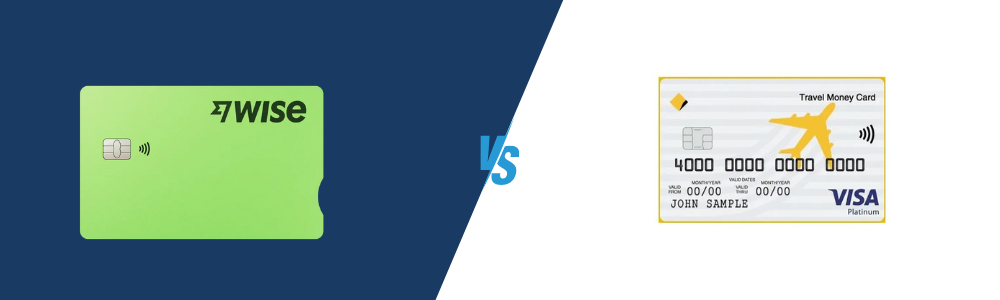
If you’re looking for a travel card which can help you conveniently and cheaply spend in foreign currencies – either when you travel or when you shop online with international retailers – you may have heard of the Wise card and the CommBank Travel Card.
Both options offer Australian customers easy ways to hold and exchange currencies, for spending and withdrawals at home and abroad. However, how they work is a bit different. The Wise card has a one-time order fee of 10 AUD, with 40+ supported currencies and mid-market exchange rates, while the CommBank card is free to pick up, supports 16 currencies, and has rates set by CommBank, including a 3% fee to spend a currency you don’t hold.
Read on to learn more, and pick which option works best for you: Wise card vs CommBank Travel card.
Key points: Wise vs CommBank Travel Card
| Wise card | CommBankTravel Money Card |
|---|---|
| 10 AUD order fee, no ongoing costs | Free to pick up with no ongoing costs |
| Hold 40+ currencies | Hold 16 currencies |
| Mid-market exchange rates with conversion fees from 0.63% | Card network exchange rate + 3% to spend a currency you don’t hold |
| Accounts can also be used to send money to 140+ countries and receive 8+ currencies with local account details | CommBank sets the rate used to convert currencies in your account or when you top up |
Wise card vs CommBank Travel card in Australia: Side by side
Before we get into details: an overview.
| Wise card | CommBank Travel card | |
|---|---|---|
| Eligibility | Available for Australian residents, and residents of most countries globally | Available for Australian residents |
| Cost to get a card | 10 AUD | No card purchase fee |
| Supported currencies | 40+ currencies supported | 16 currencies supported |
| Exchange rate | Mid-market exchange rate | Card network exchange rate + margin set by CommBank |
| Cost to spend a currency you hold | No fee | No fee |
| Cost to spend a currency you don’t hold | From 0.63% | 3% |
| ATM fees | 2 withdrawals, to a value of 350 AUD/month free – after that, 1.5 AUD + 1.75% | 3.5 AUD or the currency equivalent |
| Virtual card | Available | Not available |
Correct at time of writing – 6th February 2026
*Wise will not charge you for these withdrawals, but some additional charges may occur from independent ATM networks
Which card works best for you might depend on your preferences and how you’ll spend with your card.
Wise has a broader range of currencies, and uses the mid-market rate for currency conversion with low fees from 0.63%. You’ll get a couple of free ATM withdrawals monthly – but there’s an initial cost of 10 AUD to get the card in the first place.
You can pick up a CommBank Travel card in your local branch or order in Netbank if you’re already a customer, and hold 16 currencies. There’s no fee to get your card in the first place, but you pay 3% if you spend a currency you don’t hold in your account, or a currency that the card can’t support.
Writer’s tip: Choosing between the Wise card vs CommBank travel card
When comparing the Wise card vs CommBank Travel Money Card, think beyond the upfront cost of getting the card. How often you travel, which currencies you spend in, and whether you’re likely to hold the right currency in advance can affect what you end up paying overall.
If you tend to travel to multiple destinations or spend in currencies you don’t always pre-load, exchange rates and conversion fees can matter more than the card’s initial price. For shorter or one-off trips to supported destinations, simplicity and availability may be the bigger deciding factors.
Pros and cons
| Wise card pros | CommBank card pros |
|---|---|
|
|
| Wise card cons | CommBank card cons |
|
|
Correct at time of writing – 6th February 2026
*Wise will not charge you for these withdrawals, but some additional charges may occur from independent ATM networks
Wise card vs CommBank Travel card: The Verdict
The Wise card and the Commbank Travel card have similar features, including a multi-currency account option, and easy ways to spend and withdraw overseas. However, their focus is a little different which may make one more suited to you than another.
The Wise card has a fee to order – but then no ongoing charges, and can support 40+ currencies with mid-market exchange rate conversion. Fees are low and there are also other features like ways to send and receive global payments with low costs. This may make it a better option for customers looking for a long term solution to manage money across currencies with low fees.
The CommBank Travel card has no upfront fee, and no ongoing charges. It supports 16 currencies, but if the currency in your destination is not supported – or you forget to convert your balance – there’s a 3% fee. Flat ATM fees apply. This card can be handy for customers looking for a solution from an Australian bank, where you can walk into a branch to order a card and talk through your options with a team member.
How do they work?
To get a Wise card you’ll need to register a Wise account online or in the Wise app. You can then order a Wise card in a few clicks, for delivery to your home address. Your Wise card is linked to a multi-currency Wise account which can hold 40+ currencies and which you can view and manage using your phone or laptop.
Just add money in AUD or the currency of your choice, and switch to the currency you need for spending in your destination. If you’d prefer, you can also leave your money in dollars and let the card switch at the point of payment with no extra fee to pay. Currency exchange uses the mid-market rate with low fees from 0.63%.
You can order a CommBank card in Netbank if you’re a customer already, or visit a branch. Once you have your card you can add money with BPay, and switch to one of 16 supported currencies. It’s free to spend a currency you hold, but there’s a 3% fee to spend an unsupported currency or if you’ve not exchanged to the required currency already.
CommBank cards have no upfront fee and no ongoing charges.
Wise card limits
Generally there’s no limit to how much you can hold in your Wise account, which is linked to your Wise card. There are a few limits attached to the Wise card for security. When you get your card, the limits are set to a default amount per month. However, you can also set yourself daily limits within the Wise app if you’d prefer to control your cash flow differently.
Here are the Wise card limits for Australia:
- Minimum load: No minimum
- Maximum load: No maximum
- Maximum balance: No maximum
- Maximum spend amount: 52,500 AUD a month
- Maximum ATM withdrawal amount: 7,000 AUD a month
CommBank card limits
Commbank’s travel card limits work in a slightly different way to the limits of a Wise card – here’s a rundown:
- Minimum load: 50 AUD for first load
- Maximum load: 50,000 AUD
- Maximum balance: 50,000 AUD
- Maximum ATM withdrawal amount: 2,500 AUD a day
What type of cards are they?
The CommBank Travel Money Card is also a debit card and can be used for international purchases and cash withdrawals where debit cards are accepted. Both cards use a major card payment network, which supports international transactions.
Are Wise and CommBank Travel cards available in Australia?
Yes. The Wise card is available to people living in Australia and most other countries globally – you can order your card using your local ID and proof of address more or less wherever you call home. The CommBank Travel card is available for Australian residents.
Wise vs CommBank Travel card: Fees
Getting a travel card for spending in foreign currencies can be a smart way to cut the costs of travel. However, as different providers have very different fee structures, shopping around is still important. Here’s an overview of the key fees you’ll pay with both Wise and CommBank:
| Wise card | CommBank Travel card | |
|---|---|---|
| Cost to get a card | 10 AUD | No card purchase fee |
| Currency conversion fees | From 0.63% | Set by CommBank, variable |
| Cost to spend a currency you hold | No fee | No fee |
| Cost to spend a currency you don’t hold | From 0.63% | 3% |
| ATM fees | 2 withdrawals, to a value of 350 AUD/month free – after that, 1.5 AUD + 1.75% | 3.5 AUD or the currency equivalent |
Correct at time of writing – 6th February 2026
*Wise will not charge you for these withdrawals, but some additional charges may occur from independent ATM networks
The costs of using your card overseas can vary depending on your spending patterns. One thing that’s worth checking is whether or not the CommBank card covers all of the destinations you’ll go to. If you don’t have the currency you need in your account you can still use your card – but there’s an extra 3% to pay, which can push up your costs overall. With 40+ currencies supported, the Wise card has a broader range, and may also have a lower currency conversion cost. Compare both to see which works best for you.
Exchange rates used: Wise card and CommBank Travel Card
When spending in a foreign currency, the exchange rate used can have a noticeable impact on the final cost of a transaction. Even if a card has low or no upfront fees, differences in exchange rates or added markups can increase overall costs.
The Wise card uses the mid-market exchange rate for currency conversion, with a transparent conversion fee from 0.63%. It’s the same rate you see on global currency markets, and the applicable fee is shown before you spend or convert.
The CommBank Travel Money Card uses exchange rates set by CommBank. If you spend a currency you already hold in your account, no additional conversion fee applies. But, if you spend a currency you don’t hold, CommBank converts the transaction using its exchange rate and applies a 3% fee, which can increase the total cost of the purchase.
CommBank Travel Card vs Wise: Which card is cheaper?
So, given they have somewhat different pricing schemes, which is cheaper: Wise or CommBank?
The answer is that it depends on the way you want to spend, and where you’ll be travelling to.
There’s a one-time fee for the Wise card, of 10 AUD. Once you have your card, you’ll get a new one for free when your original one expires, and you can use your card in 150+ countries for spending with the mid-market exchange rate. The one-time fee might mean that the Wise card is a better choice for people looking for a card they can use for spending in foreign currencies over a longer period of time – there’s no ongoing fee to pay, so you can order your card and use it whenever you travel or spend online with foreign retailers, with low fees and the mid-market rate. Wise accounts also offer extras like ways to be paid in foreign currencies and easy options to send money to 140+ countries.
The Commbank Travel card has no initial fee to pay, which might make it a good option for a one-time trip overseas. Make sure the currency you want is supported, as extra fees apply when you spend a currency you don’t hold.
Are Wise and CommBank travel cards safe to use?
Both cards are safe to use with normal precautions and include security features designed to help customers manage spending, reduce fraud risk and respond quickly if something goes wrong.
Wise card security features
The Wise card is managed through the Wise app, where you can enable two-step login authentication, receive real-time transaction notifications and freeze or unfreeze your card instantly if it’s lost or misplaced. You can also use a Wise virtual card for online purchases, which means your physical card details don’t need to be shared with merchants.
CommBank Travel Money Card security and support
The CommBank Travel Money Card includes purchase security insurance, which may cover eligible items bought with the card if they’re lost, stolen, or damaged within 90 days, subject to terms and limits. If your card is lost, stolen, or stops working while you’re overseas, CommBank offers 24/7 phone support, emergency card replacement, and in some cases access to an emergency cash advance.
Ease of use: Wise Travel Card vs CommBank Travel Card
- Creating an account: Register with Wise online or in the Wise app. Creating an account with CommBank can vary depending on your specific needs – if you’re already a customer you can easily order a travel card in the app
- Ordering a card: Order a Wise card online or in the Wise app. You can order the CommBank Travel card in Netbank or your local branch.
- Where can the card be used: Both cards can be used globally
- Replacement: Your Wise card will be replaced for free when it expires – you’ll be reminded of the expiry date so you can check your shipping address. The CommBank Travel card is free to order – just pick up a new one when your old one expires.
- Limits: Wise cards can hold an unlimited balance, with monthly limits on spending and ATM withdrawals which you can adjust in the Wise app. The CommBank Travel card has limits on the amount you can load and hold, including annual limits, as well as daily ATM limits.
Customer reviews: Wise card and CommBank Travel Card
Customer reviews are a grat way to gain some additional context on how a travel card works in everyday situations, alongside the features and fees outlined above. Below is an example of feedback shared by a Wise customer on Trustpilot.
Wise card customer review
“I’ve used this account for years. We live abroad a few months a year and the card is indispensable for pulling local currency out of ATMs (no fees). I load up USD (and get a great interest rate) then watch for my desired exchange rate before converting. An email alert tells me when the exchange rate is favorable.”
– Sarah. P*
*Customer name changed for privacy. The customer was not paid to share a review. Review taken from Trustpilot, February 2026.
CommBank Travel Card customer reviews
At the time of writing, CommBank does not have a claimed Trustpilot profile. Reviews on the unclaimed profile are limited, and none specifically reference the Commbank Travel Card, making it difficult to include a comparable customer review.
Can I use the Wise and CommBank travel cards abroad?
Yes. Both cards are optimised for international use. Use your card wherever the network is accepted – bear in mind that fees apply when spending a currency you don’t hold in the account. CommBank has a 3% fee, while Wise currency conversion starts from 0.63%.
Supported currencies on Wise and CommBank travel cards
The Wise card supports 40+ currencies for holding and exchange. The CommBank Travel card can hold 16 major currencies.
You can use your card pretty much globally in both cases. However, it’s worth remembering that there are costs if you spend a currency you don’t hold in your account. CommBank converts your balance using the card network exchange rate and adds a 3% fee, while Wise uses the mid-market rate and fees from 0.63%.
Alternative cards
There are a few different options on the market in Australia if you’re looking for a travel card you can use for overseas and foreign currency spending. If you’re not sure about Wise and CommBank, you may want to consider:
Revolut: Open an account with no ongoing fees, or upgrade to one with monthly charges and more features. Hold over 30 currencies, and get some no fee weekday currency conversion with all account tiers. Out of house conversion fees apply.
Travelex: Pick up card in person or order online, with no ATM fees when you make a withdrawal. Cards are accepted globally, but bear in mind there are inactivity and account close fees.
Conclusion: Comparing CommBank Travel Card vs Wise
The Wise card and the CommBank travel card are both strong options for Australians looking for an easy and low cost way to spend in foreign currencies. Which works for you will depend a lot on how you’d like to use your card, where you’re travelling to, and what other account features you might want.
The Wise card has a one-time fee – but once you have your card there are no ongoing costs and it’ll be replaced for free when it expires. You can hold 40+ currencies in your account and currency conversion uses the mid-market rate with low fees from 0.63%. Accounts also come with extras like easy ways to send money to others in 140+ countries, and to receive payments with local bank details from a selection of countries.
The CommBank Travel card has no initial fee, and lets you hold 16 currencies. There’s no fee to spend a currency you hold, and no ongoing charges to worry about.
Use this guide to compare both options and see which will suit you best.
FAQ – Wise vs CommBank travel cards
What is the difference between Wise and CommBank travel cards?
Both cards are intended for foreign currency spending, with great solutions for convenient currency exchange when you travel. The key differences include the fact that Wise cards support 40+ currencies, while CommBank only has 16, and that the Wise card has a one-time order fee of 10 AUD, while CommBank has no charge initially.
Is the CommBank Travel card a Visa debit card?
The CommBank Travel card is a Visa debit card.
What type of card is a Wise card?
The Wise card is an international debit card that can be used for purchases and cash withdrawals where the card payment network is accepted.
Is Wise Card or CommBank travel card better?
Whether the Wise card or CommBank travel card is better depends on how you plan to use the card. The Wise card may suit you better if you spend in multiple currencies or travel often, while the CommBank Travel Card can work well for shorter trips to supported destinations with no upfront card fee. Comparing supported currencies alongside exchange rates and conversion fees can help you decide which option fits your needs.
Useful resources
The information in this comparison is based on publicly available details from Wise and Commonwealth Bank of Australia:
- Wise card: Official information on Wise card features, supported currencies, fees, spending abroad and in-app controls.
- Wise pricing: Details on Wise currency conversion fees, exchange rates and international spending costs.
- CommBank Travel Money Card: Product information covering supported currencies, fees, card usage and availability for Australian customers.
- CommBank Travel Money Card fees and limits: Guidance on currency conversion costs, ATM fees and card limits.
- CommBank card security and support: Information on purchase security insurance and emergency assistance while travelling.