How to Open a Bank Account in the UK: The Easy Way 2026
If you’re an expat planning your relocation – or even if you’ve moved to the UK already – you might be wondering how best to get a UK bank account to hold and spend in British pounds (GBP).
While it’s possible to get a British bank account before you get to the UK, it can be expensive and complex to get set up with a bank. This guide runs through options offered by UK banks and alternative providers that may suit people who don’t yet have a UK address, including Wise and Revolut. The right choice depends on eligibility, features and fees.
Key points: Online bank account opening
- To open an account as a foreigner living in the UK you’ll need to prove your identity and address – banks also may need proof of income or savings
- UK bank accounts are also available for non-residents through banks and alternative providers like Wise and Revolut
- Non-resident accounts from banks can have restrictive eligibility requirements and high minimum balances
- UK bank accounts may not have ongoing fees, but transaction fees are pretty inevitable. These vary depending on how you use your account
- There’s no single best UK bank account for foreigners, new arrivals and non-residents – compare a few to help you choose
Writer’s tip: how to open a bank account in the UK from Australia
Delays usually come from address and identity checks, not the application itself. Before you apply, get clear photos of your ID and a recent proof of address ready, and check what the provider accepts if you don’t yet have UK paperwork in your name.
If you’re opening an account before you arrive, prioritise options that accept an international proof of address and let you set up GBP access in-app. Once you have a UK address and supporting documents, you can always compare UK resident accounts and switch later if needed.
What documents do I need to open a UK bank account?
UK banks need to complete KYC (Know Your Customer) verification checks – much like banks all around the world. That means most British banks will ask customers for the following:
- Proof of identity – a valid passport, national identity card or driver’s licence for example
- Proof of UK residential address – a bank or credit card statement, utility bill or tax return in your name
KYC checks are designed to stop fraud, money laundering and illegal account use. However, if you don’t have a UK proof of address yet it can make it harder to get your GBP account set up with a British bank.
Some specialist providers and expat services from major UK banks are able to help non-residents to legally get a UK account, by accepting a broader range of documents for verification checks. Expat banking services often target high wealth individuals, and have high minimum balance requirements. Specialist online services may be more flexible – more on that coming right up.
Open a UK bank account from Australia: Save the paperwork with providers like Wise or Revolut
UK banks usually require customers to provide a proof of residence document showing a local UK address. That can make it tricky if you’re not a resident yet – or even if you’ve just moved to the country and don’t yet have bills and household paperwork in your name.
Specialist services like Wise or Revolut can help. These alternatives to banks have been built with international customers in mind, and can accept a proof of address from the UK or a range of other countries. Verification is done by uploading images of your paperwork online or in the provider app. Just use your proof of address from your country of residence, to open a Wise or Revolut account online, and open up a GBP balance.
Once you’re all set up you can receive, hold, and spend GBP easily before you even arrive in the UK – a helpful option for expats, non-residents and digital nomads who want to hit the ground running.
Wise
Wise offers both low cost international payments, and personal and business multi-currency accounts. The Wise account is a good option for non-UK residents and new arrivals looking to manage their money across GBP and 40+ other currencies.
You can get up and running with an international proof of address and manage your account online or in the Wise app. Currency exchange uses the mid-market exchange rate, with a transparent fee, and you’ll be able to receive 8+ currencies with local account details, including a UK account number and an Australian account number and BSB code. You can also send payments to 140+ countries and spend using your Wise international debit card in over 150 countries.
Account types: Wise personal accounts are free to open, with no minimum balance or monthly fees to pay.
Eligibility: Available to non-UK residents and new arrivals in the UK. Not all services and features are available in all locations – full details by location available on the Wise website.
Is it safe? Wise accounts include security features such as two-step login, in-app notifications, and the ability to freeze a card instantly in the app. Account access and transactions are monitored, and you can manage devices and security settings in the app.
How to open an account with Wise
- Download the Wise app or open the Wise desktop site
- Click Sign up and create an account with your email, Facebook, Google or Apple ID
- Follow the prompts to enter the details needed
- Upload a snap of your ID and address documents
- Once your account has been verified you’re good to go
Revolut
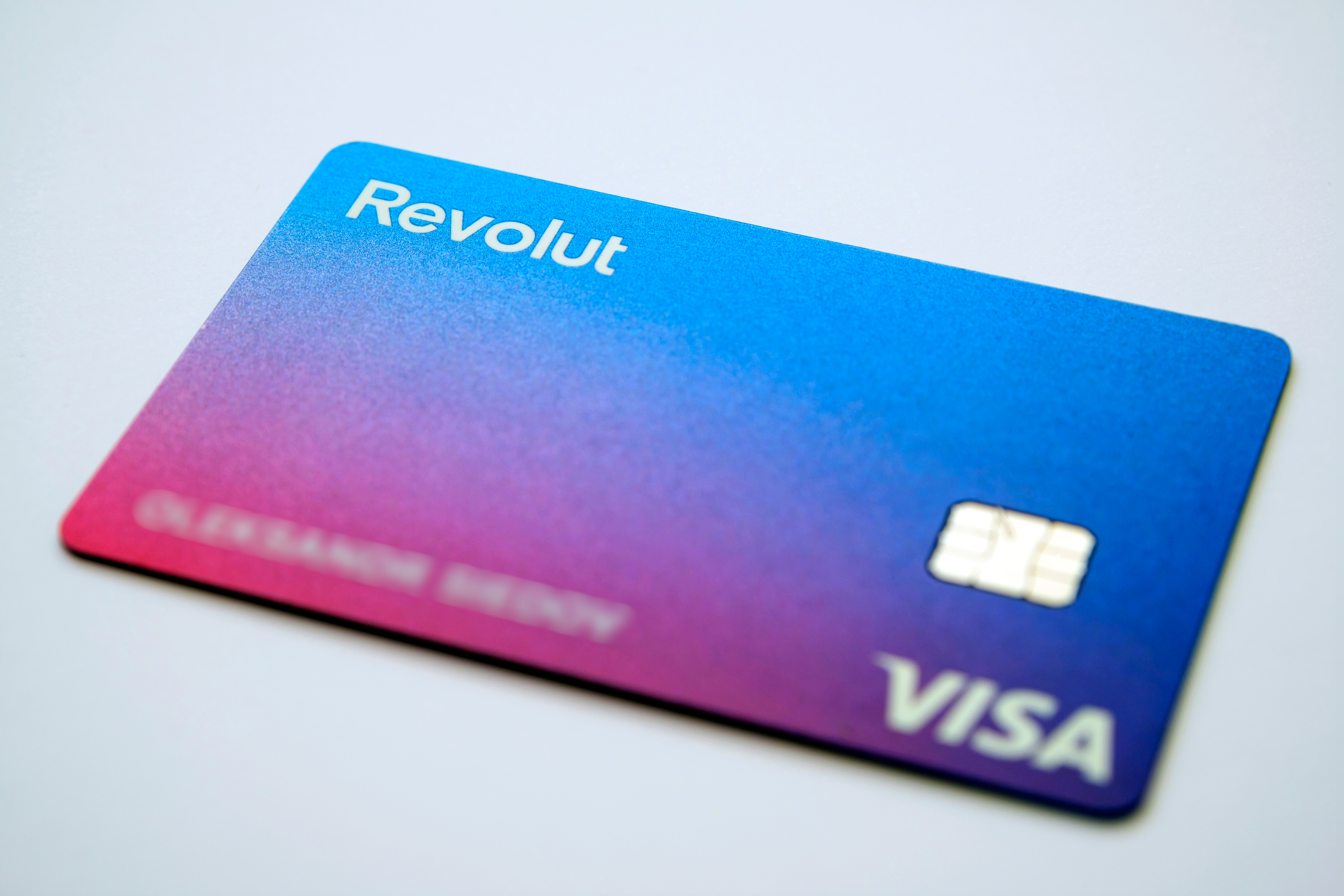
Revolut accounts have multi-currency functionality for over 30 currencies including GBP, a linked debit card for spending and withdrawals, and extra perks like budgeting and saving tools. Revolut customers can provide a proof of address from Australia, the UK or any of the other regions they operate in – making this a provider to look at if you want to set up your account before you head off to Britain.
Standard Revolut plans come with no monthly fees and an array of features including some no fee currency exchange. Or you can upgrade to a different account tier, where you’ll pay a monthly fee to get higher levels of no fee transactions and extra benefits.
Account types: Both personal and business accounts are available. Standard plans have no monthly fee, higher tier accounts have monthly fees up to 28.99 AUD, with different costs depending on your address when you open your account
Eligibility: Available to new UK arrivals and non-UK residents with addresses in countries and regions including the EEA, Australia, Singapore, Switzerland, Japan, and the US
Is it safe? Revolut accounts include app-based security features such as login protection, transaction notifications and card controls to help you manage spending and respond quickly if a card is lost.
How to open an account with Revolut
- Download the Revolut app
- Enter your phone number and set a PIN – you’ll get a verification message from Revolut
- Use the verification code to access the app and enter the details needed to create your account
- Upload the required documents for verification
- You can deposit funds and use your account once verified
Barclays International
Barclays can’t offer international accounts to people based in Australia, but if you’ve already arrived in the UK and hold a biometric residence permit you’ll be able to get started applying for an account in the Barclays app. You’ll be asked to upload documents and provide 3 years of address details but once your account is verified you can use it right away.
For the standard Barclays current account there’s no monthly fee and you can apply for an optional overdraft if you want one. Or check out the range of other accounts to find the best one to suit your specific needs.
Account types: Broad range of different UK bank accounts, plus mortgages, loans, credit cards and more
Eligibility: UK citizens or residents, aged over 18 can apply using the Barclays app
Is it safe? Barclays offers standard bank security features such as secure app access, transaction monitoring and fraud support.
How to open an account with Barclays
- Open the Barclays website or app
- Find the account you’re interested in and tap Apply
- You’ll be prompted to upload your ID documents and take a video selfie for verification
- You can deposit funds and use your account once verified
HSBC Expat
The HSBC Expat division is based offshore, and offers accounts and services for high wealth individuals and people who live and work internationally.
HSBC Expat current accounts are offered in GBP, USD and EUR, with savings accounts available in 19 currencies. However, fairly high minimum balance requirements apply which can be a barrier. To qualify for an HSBC Expat account you’ll need to maintain a minimum balance of £75,000.
It’s usually fairly easy to open an HSBC UK account upon arrival if you already have a relationship with the HSBC Expat service.
Account types: Current accounts can hold GBP, EUR and USD, but savings accounts are available in 19 global currencies.
Eligibility: Accounts come with minimum balance requirements of £75,000.
Is it safe? HSBC also offers standard bank security features and fraud support through its digital banking tools and customer service channels.
How to open an account with HSBC Expat
- Visit the HSBC Expat website and tap Check eligibility and apply
- Confirm you’re eligible for the account and have the paperwork needed
- Enter your personal information, following the prompts
- Upload the required documents for verification
- You can deposit funds and use your account once verified
Customer reviews: UK account opening experiences
Customer reviews can help illustrate how different providers perform when it comes to opening an account and day-to-day use. Below are examples of feedback shared by customers on Trustpilot, reflecting their experiences when opening and using UK or GBP accounts.
Wise customer review
“Incredible experience with Wise. Fast, transparent, and stress-free compared to UK banks. Full tracking, clear updates, and instant refunds when needed. UK banks feel outdated by comparison.”
— Shraine T.*
Revolut customer review
“Seamless innovative and reliable banking. Always evolving technologically making banking a very smooth and pleasant experience.”
— David O.*
Barclays customer review
Barclays does not have Trustpilot reviews specifically labelled for its international or expat accounts. However, customers have shared feedback relating to general account opening and support.
“So far so Good! Recently opened an account and had a small problem with transferring money. Phoned – spoke to a UK Caller who could actually understand me which was a great start these days. Imagine my surprise when they actually just did what I asked and actually helped to open a better account that would suit me better! Very rare thing these days so thanks Barclays for not going AI or foreign call centres that are useless – I will be recommending everyone to open an account with you. The app is great too.”
— Mr C.*
HSBC Expat customer review
“Hassle Free opening. I was utterly astounded at how easy it was to open the account, I expected masses of documents, Notarizations, apostle, Translations, etc.. but it was so easy and simple with very reasonable expectations with regards to the documents, the account was opened in a week.”
— Lee M.*
*Customer name changed for privacy. The customer was not paid to share a review. Results may vary. Review taken from Trustpilot, 7th February 2026.
How to open a bank account in the UK
The standard requirements to open a bank account with a high street bank in the UK include:
- Proof of identity
- Proof of UK residential address
- A completed application with all your personal details
- Opening deposit – there may be a minimum deposit requirement
If you have all of these documents already you’ll find it relatively easy to open a UK bank account. Some banks let you upload your paperwork online, but others prefer you to visit a branch to hand over your documents in person.
The tricky bit often comes if you don’t have proof of a UK address. Opening an account with a proof of address from overseas is perfectly legal, but because it’s harder for the bank to verify, many just don’t allow it. Instead, major UK banks may refer you to their expat division, which is set up to offer accounts to non-residents. However, the accounts on offer are often packaged as exclusive options for high wealth individuals – and typically come with high fees.
If you’re not getting what you need from a UK bank it might be time to look at alternatives – more on that later.
What do I need to know before opening a bank account in the UK?
To open a UK bank account you’ll usually be asked to prove your ID and your UK address, and you may also need to provide documents showing you’ve got the legal right to reside in the UK if you’re asked. Check with your preferred bank to see if you can open an account online or through an app – while this is usually available to UK residents with standard paperwork, it may not be an option if you don’t have UK issued documents.
It’s also helpful to check if the account you’ve picked needs a minimum opening deposit amount. In this case you’ll have to take along cash to deposit, or make a bank transfer to your new account, to activate it.
Can I open a bank account in the UK before arrival?
To open a bank account in the UK prior to arriving in the country you’ll need to find a provider which will let you use an international proof of address for KYC purposes. That may mean picking:
- An account from a British high street bank’s expat services division
- Accounts from digital only banks which operate in the UK
- A specialist provider which offers multi-currency accounts
As we mentioned, expat banking services can be pricey. Digital banks are an option, and some – like Monese – do let you get an account to handle GBP with a non-UK address. However, restrictions can still apply, and to open a Monese account, you’ll need to be living in the UK or one of the 30 countries in the European Economic Area, which isn’t much use if you’re still in Australia.
If you want to get ahead of the game and get your GBP bank account set up before you arrive you’ll probably be better off with a specialist service designed for international use – like Wise or Revolut.
Can I open a bank account in the UK only with my passport?
You’re unlikely to be able to open a UK bank account with just a passport. Opening an account with a UK bank usually means you need to be a UK resident – and you’ll often be asked to provide a proof of address to back this up.
Which account is best in the UK for foreigners?
Let’s walk through the features and fees for some UK and GBP accounts you can open, to hold or spend in British pounds. We’ve compared a couple of non-bank providers – Wise and Revolut – against the options from popular UK banks Barclays and HSBC. Barclays’ international division can’t help people living in Australia to open a UK account so you’ll need to wait until you arrive – but HSBC does have expat accounts you can open to hold GBP from Australia.
| Service | Wise | Revolut | Barclays | HSBC Expat |
|---|---|---|---|---|
| Currencies covered | 40+ currencies including GBP, USD and EUR | 30+ currencies | Current accounts in GBP
Travel wallet coversUSD and EUR |
Current accounts in GBP, USD and EUR
Savings accounts in 19 currencies |
| Open before you arrive in the UK | Yes | Yes | Yes | Yes |
| Open online | Yes | Yes | Yes | Yes |
| Opening fee | No fee | No fee | No fee | Minimum balance: £75,000 |
| Fall below fee | No fee | No fee | No fee | Under funding fee: £50 |
| Maintenance fee | No fee | 0 AUD – 28.99 AUD | No fee | Waived if minimum balance is maintained |
| International transfers | Low fee, varies by currency | Fee varies by currency and payment value | £0 – £25 + third party charges + possible exchange rate markup | Online transfers up to £6 + third party charges + possible exchange rate markup |
*Details correct at time of research – 7th February 2026
As a non-resident or new arrival to the UK you do have a decent selection of options when it comes to getting a GBP account. Digital providers offering multi-currency functionality are flexible if you travel, send, spend or receive in a range of currencies.
Expat accounts may appeal if you want a more personal service or need to access a fuller suite of options including overdrafts, investments and credit.